Cleairy logo. Wet Scrubber

Horizontal Wet Scrubber – Horizontal Gas-Flow Scrubbing

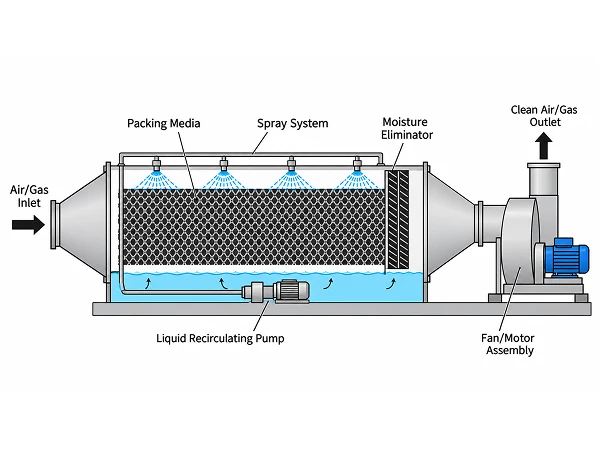
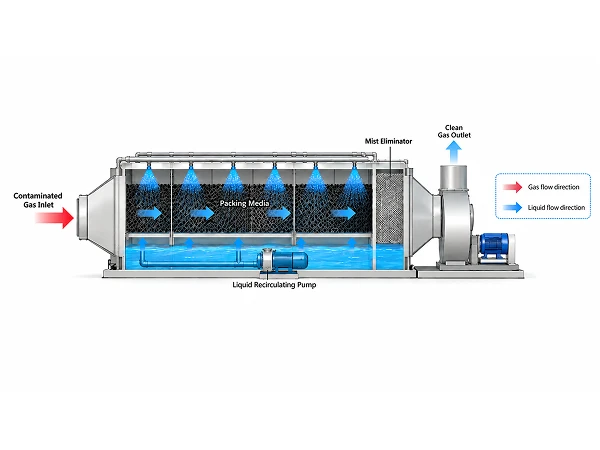
Horizontal wet scrubber is an industrial exhaust gas treatment device that uses a horizontal gas-flow configuration. Pollutant-laden exhaust gas enters from one side of the equipment and passes sequentially through the spray section, packing or other gas–liquid contact zones, and the mist elimination section inside the scrubber body, transferring pollutants from the gas phase to the liquid phase through dissolution, absorption, or chemical reaction.

Compared with conventional vertical scrubbers, the horizontal configuration has a lower overall height and can be arranged horizontally along the plant floor or equipment platform, making it particularly suitable for projects with limited installation height, existing horizontally routed ductwork, or a need for a low-profile equipment layout.

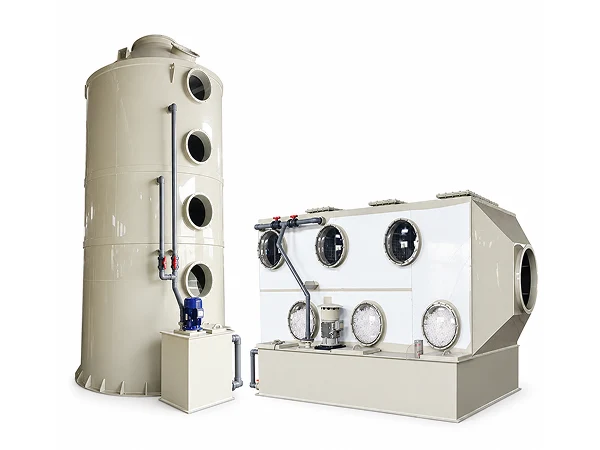
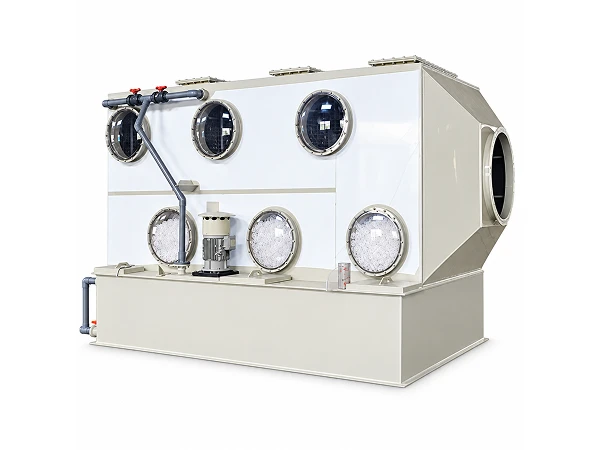
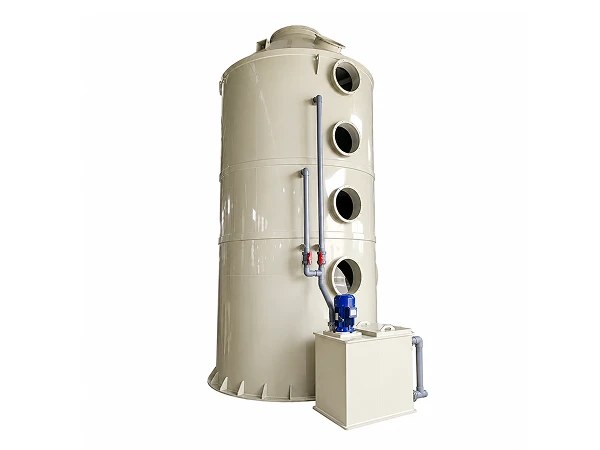
A horizontal wet scrubber placed on a flat surface
Features
  • Low-profile structural design. The horizontal layout can significantly reduce the overall equipment height.
  • Large gas–liquid contact area. The packing layer provides the absorbent liquid with a large wetted surface area.
  • Suitable for a wide range of absorbable gases. Different types of pollutants can be treated by selecting different scrubbing liquids.
  • Multiple system configurations available. Automatic chemical dosing, pH control, mist elimination, and other systems can be configured.
  • Multiple corrosion-resistant materials available. PP, FRP, and other materials are available.
  1. Tower Body: Houses the packing, spray system, and mist eliminator, and provides space for gas–liquid contact.
  2. Spray System: Consists of spray piping and nozzles, uniformly distributing the recirculating liquid over the top of the Packing Layer.
  3. Mist Eliminator: Removes liquid droplets entrained in the treated gas.
  4. Recirculation Tank: Stores and collects the scrubbing liquid.
  5. Recirculation Pump: Recirculates the scrubbing liquid from the recirculation tank to the spray system.
  6. Packing Bed: The core gas–liquid mass-transfer zone of the scrubber.
Principle
  1. Exhaust gas enters horizontally. Pollutant-laden exhaust gas enters from one end of the equipment and flows horizontally along the scrubber body.
  2. Scrubbing liquid spray. The recirculation pump delivers the scrubbing liquid to the spray system, where it is sprayed from the top or multiple directions.
  3. Gas–liquid contact. Exhaust gas passes through the spray section and packing layer, continuously contacting the scrubbing liquid and the liquid film on the packing surface, where pollutants are absorbed or neutralized.
  4. Droplet separation. The treated gas passes through a mist eliminator to remove entrained droplets.
  5. The scrubbing liquid is collected and recirculated. The liquid that has absorbed pollutants flows into the recirculation tank at the bottom of the equipment and is recirculated after makeup water addition, chemical dosing, or blowdown.
  6. Clean gas discharge. The treated exhaust gas is discharged.
Specifications
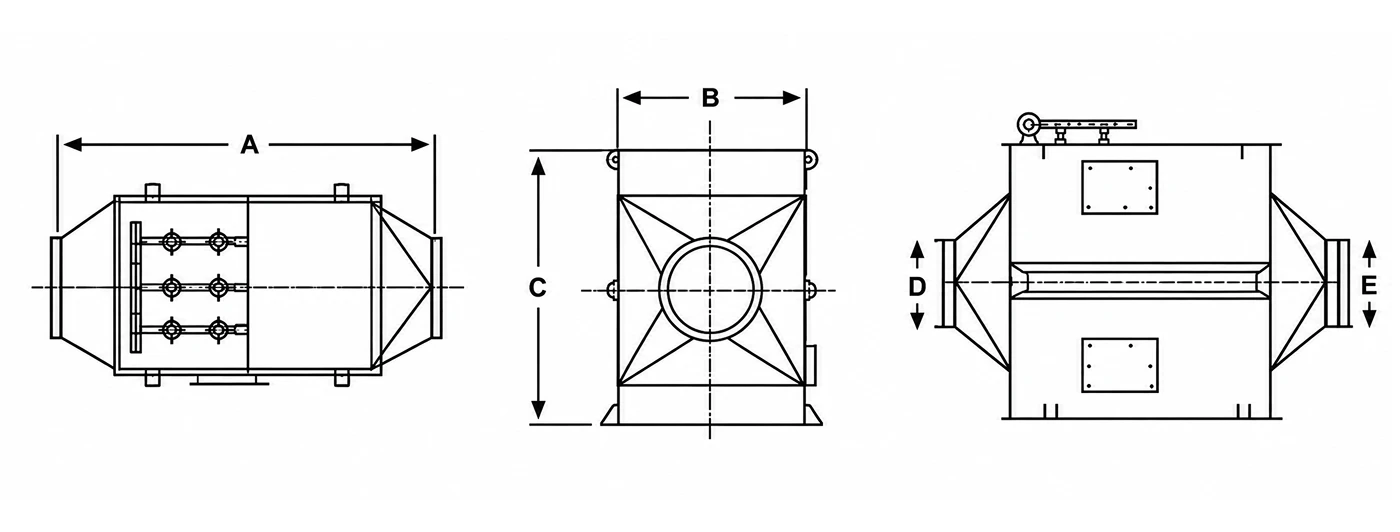
Horizontal wet scrubber dimensioned drawing
Table 1: Horizontal Wet Scrubber Specifications
Model Airflow Capacity
(m3/min)
A
(mm)
B
(mm)
C
(mm)
D
(mm)
E
(mm)
JHS-66 60 3100 600 1800 350 350
JHS-86 80 3110 700 1850 400 400
JHS-106 100 3180 800 1950 450 450
JHS-186 180 3380 1100 2250 600 600
JHS-236 230 3570 1200 2450 650 650
JHS-336 330 3690 1500 2650 700 700
JHS-476 470 3930 1800 2950 950 950
JHS-646 640 4190 2100 3250 1100 1100
JHS-756 750 4330 2300 3450 1200 1200
JHS-956 950 4590 2600 3750 1300 1300
JHS-1056 1050 4610 2700 3850 1400 1400
JHS-1156 1150 4730 2850 3950 1400 1400
JHS-1256 1250 4740 3100 4000 1500 1500
JHS-1606 1600 5250 3600 4400 1700 1700
Related products