Cleairy logo. Products

Activated Carbon Adsorption Tower – Porous Adsorption Technology

Activated Carbon Adsorption Tower is an exhaust gas treatment device that uses the adsorption capacity of Activated Carbon's porous structure to remove Organic Pollutants and Odorous Substances from Industrial Exhaust Gas.

After exhaust gas enters the Adsorption Tower, it passes through the Activated Carbon adsorption bed filled within the tower. Contaminant molecules are adsorbed and retained on the carbon material surface by the Activated Carbon's large Specific Surface Area and abundant Microporous Structure, thereby purifying the exhaust gas.

The Activated Carbon Adsorption Tower is primarily used to treat VOCs, odorous gases, and other adsorbable pollutants, and is widely used in coating, printing, chemical, electronics, pharmaceutical, laboratory, and industrial ventilation systems.

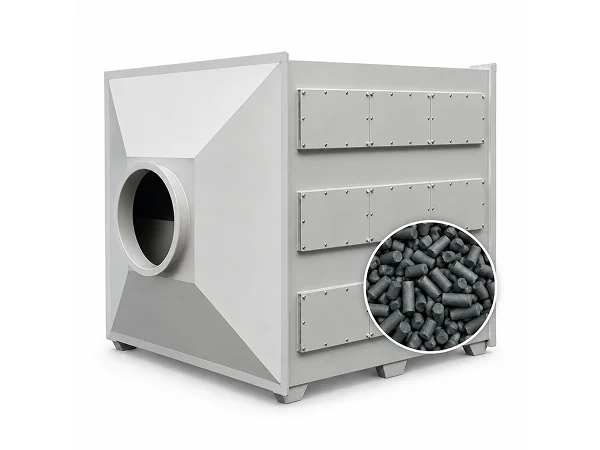
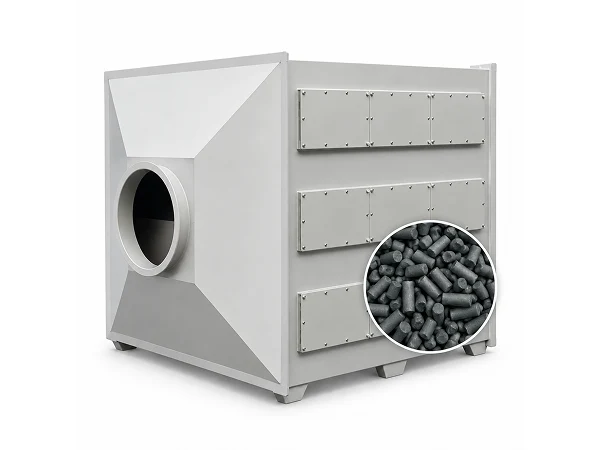
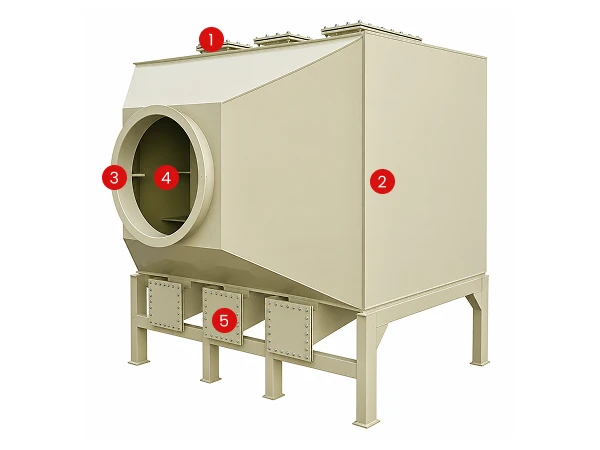
An Activated Carbon Adsorption Tower placed on a flat surface
Features
  • Efficiently adsorbs VOCs and odors. Activated Carbon has a well-developed Microporous Structure and a large Specific Surface Area, enabling effective capture of Organic Pollutants and odor molecules.
  • Suitable for low-concentration exhaust gas treatment. Activated Carbon adsorption provides effective treatment for low-concentration, high-volume VOC exhaust gas.
  • Flexible selection of adsorption materials. Select different Activated Carbon types according to pollutant type.
  • Simple structure and stable operation. The equipment primarily relies on physical adsorption, without complex chemical reactions, making maintenance convenient and operation reliable.
Activated Carbon Adsorption Tower Structure Labels
Structure
  1. Activated Carbon Filling Port. Used to add new Activated Carbon material.
  2. Tower Body. Main equipment structure, available in PP, FRP, and other materials.
  3. Exhaust Gas Inlet. Introduces contaminant-laden exhaust gas into the tower.
  4. Pre-Filtration Layer. Prevents clogging and ensures stable adsorption efficiency.
  5. Discharge Outlet. Used to discharge saturated Activated Carbon.
Principle
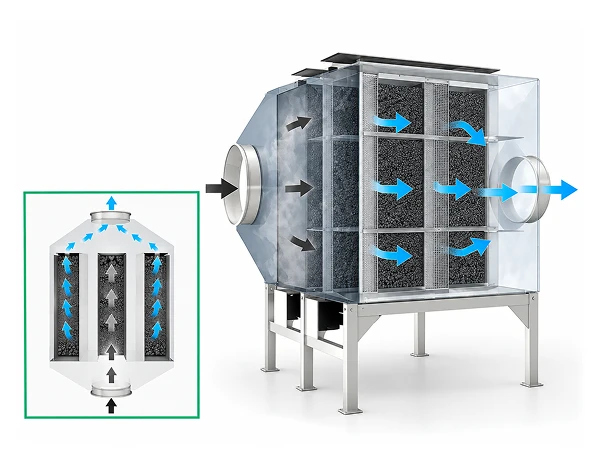
  1. Exhaust Gas Enters the Adsorption Tower. Exhaust gas containing VOCs or odor pollutants enters the tower through the ductwork.
  2. Uniform airflow distribution. After passing through the flow-directing structure, the exhaust gas enters the Activated Carbon adsorption zone evenly.
  3. Contaminant adsorption. As the exhaust gas passes through the Activated Carbon bed, contaminant molecules enter the Activated Carbon pores and are adsorbed by intermolecular forces, transferring from the gas phase to the solid surface.
  4. Clean gas discharge. The gas after adsorption treatment is discharged through the outlet.
  5. Activated Carbon replacement or regeneration. As operating time increases, the Activated Carbon gradually reaches saturation and must be replaced with new Activated Carbon or have its adsorption capacity restored through thermal regeneration, steam regeneration, or similar methods.
Activated Carbon Adsorption Tower Operating Principle Diagram
Specifications
Table 1: Coconut Shell Activated Carbon
Parameter Name/Name Water Purification Carbon Golden Carbon Fine Granular Carbon
Llodine No, mg/g ≥ 1000 1000 1000
Methylene Blue Adsorption, mg/g ≥ 135 135 135
Bulk Density, g/ml ≥ 90 95 90
Hardness, % ≥ 0.45 0.45 0.45
Ash Content, % ≤ 5 5 5
Moisture as Packed, % ≤ 10 10 10
lron Salt Content, % ≤ 0.1 0.1 0.1
PH 7-9 7-9 7-9
Related products