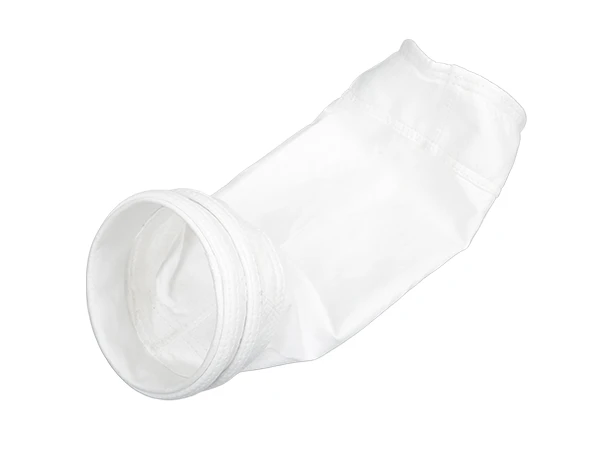
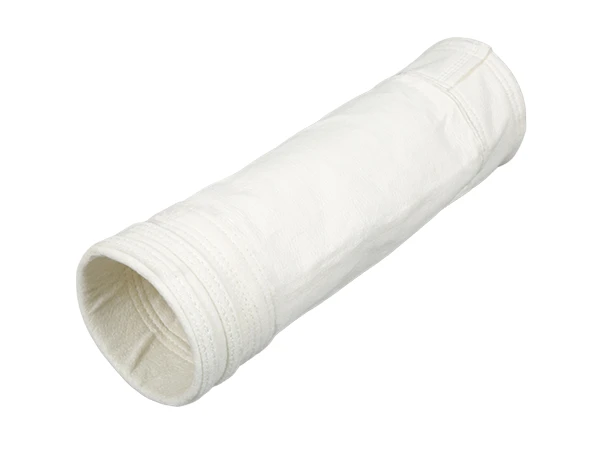
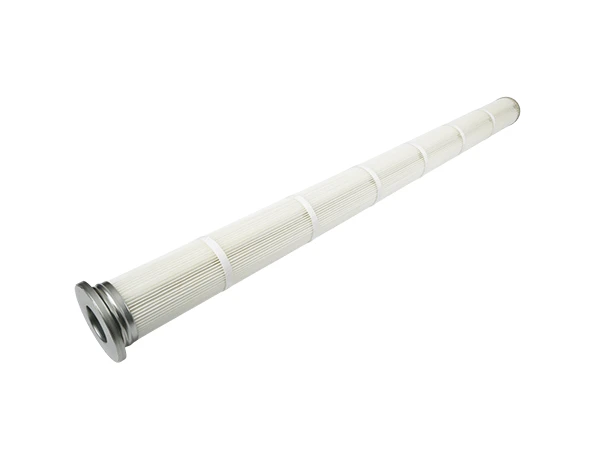
High-Temperature Flue Gas
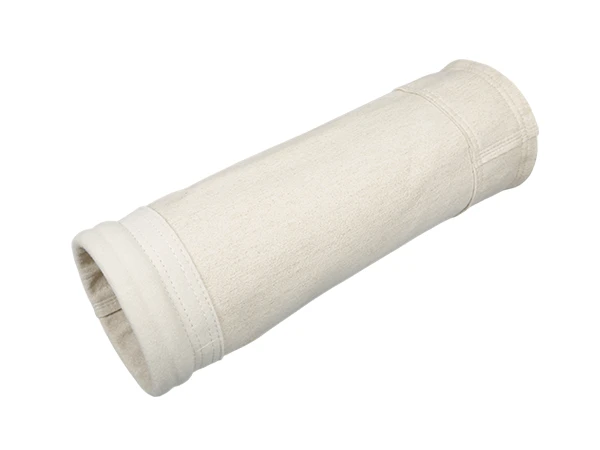
Polyimide (PI) filter bags are made from polyimide fibers through a needle-punching process. They can operate stably at 260 °C, with peak temperatures up to 280 °C. With exceptional heat resistance, chemical stability, and structural durability, they are widely used for flue gas filtration in waste incineration, cement kilns, high-temperature coal mills, steel, and metallurgy industries.
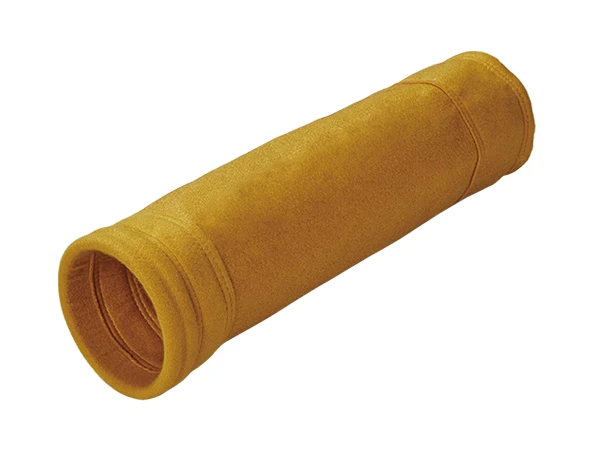
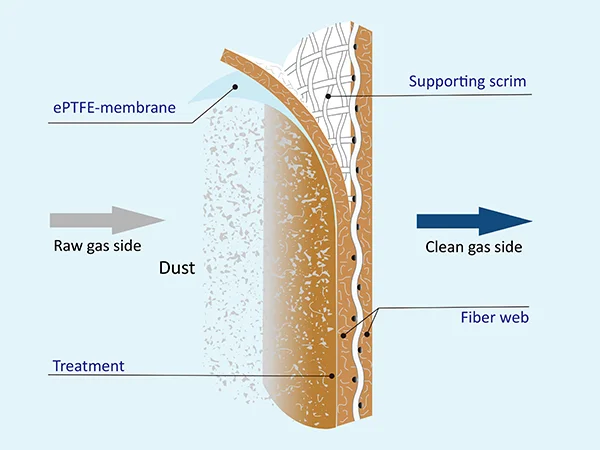
The dust collector filter bag primarily consists of a bag opening, bag body, and bag bottom. The bag body is made from fibers through a needle-punch nonwoven process, forming a three-layer structure: fiber layer – base fabric – fiber layer.
When dust-laden airflow passes through the filter bag, dust is retained on the outer surface of the filter bag (surface filtration) or within the filter material (depth filtration), while clean air passes through the medium and is discharged through the outlet.
| Product model | PFB-PI | |
| Product name | Polyimide filter bag | |
| Fiber | Polyimide | |
| Basis weight (g/m2) | 550 | |
| Thickness (mm) | 1.8 | |
| Air permeability (L/m2·s) | 200–300 | |
| Breaking strength (N/5 × 20 cm) | Warp | ≥ 1125 |
| Weft | ≥ 1400 | |
| Elongation at break (%) | Warp | < 40 |
| Weft | < 60 | |
| Operating temperature (°C) | Continuous | 260 |
| Instantaneous | 280 | |
| Post-treatment process | Singeing, calendaring, membrane lamination, water and oil repellent, anti-static, etc. | |